
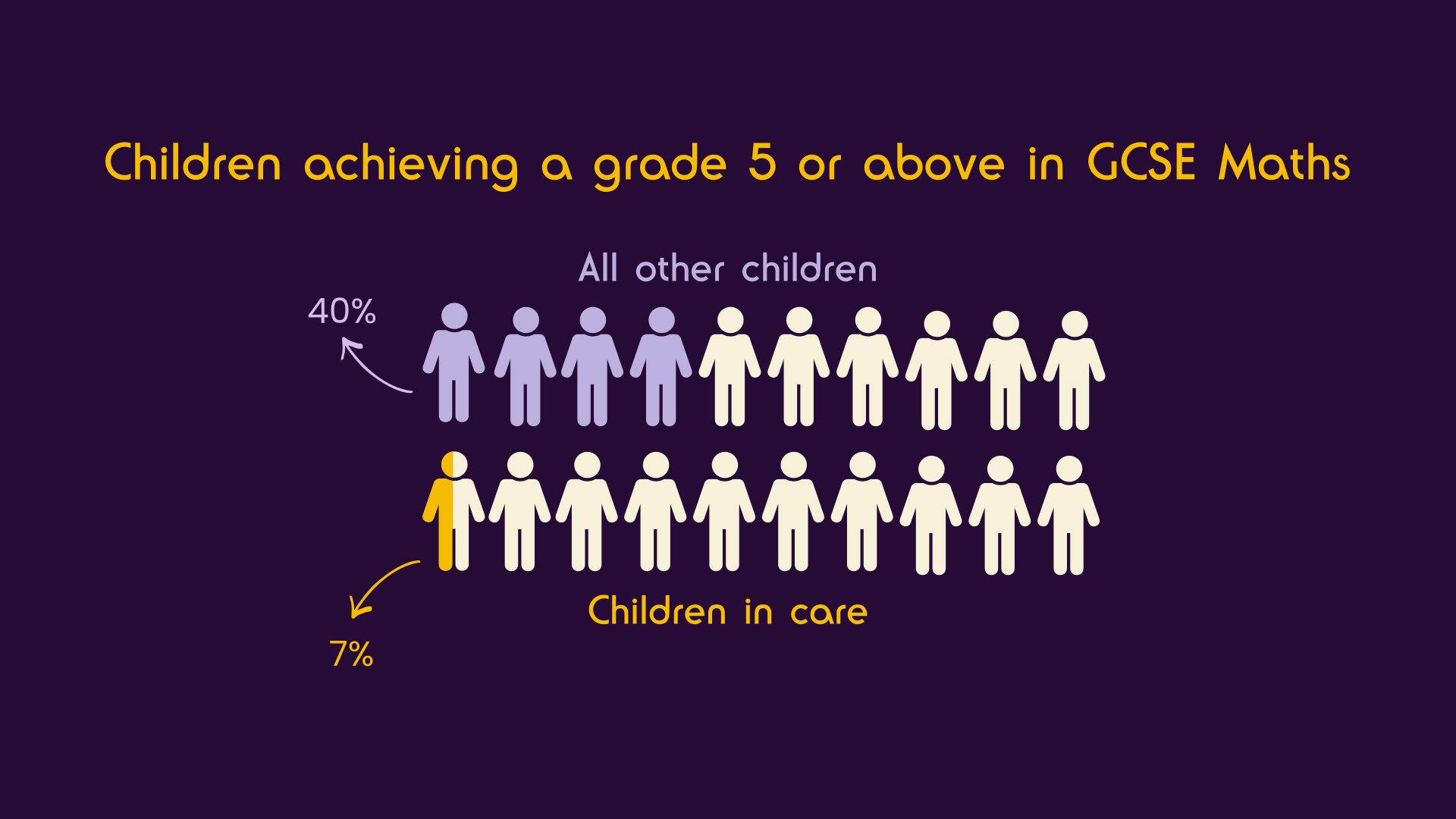
Children in care are six times less likely to pass GCSE Maths.
The thing about maths is that you need each building block in place to make sense of what comes next. Miss a month of history and you might miss the Romans, but the Victorians still make sense. Miss a few weeks of algebra, and everything that follows stops making sense. Maths learning is so sequential, and placement instability doesn’t accommodate for that.
Over a third of children in care are moved home in Years 10–13, often during their GCSE years.3 For maths attainment this is an issue, given the clear relationship between house moves and outcomes. Among children generally, 65% of those who never move home between Reception and Year 11 achieve five GCSE passes including English and Maths, compared with just 11% of those who move nine or more times.2
As a result, children in care are six times less likely to achieve a grade 5+ in GCSE Maths than all other children.4
Numeracy is one of the clearest levers of social mobility we have — and a way out of NEET (Not in Education, Employment, and Training).
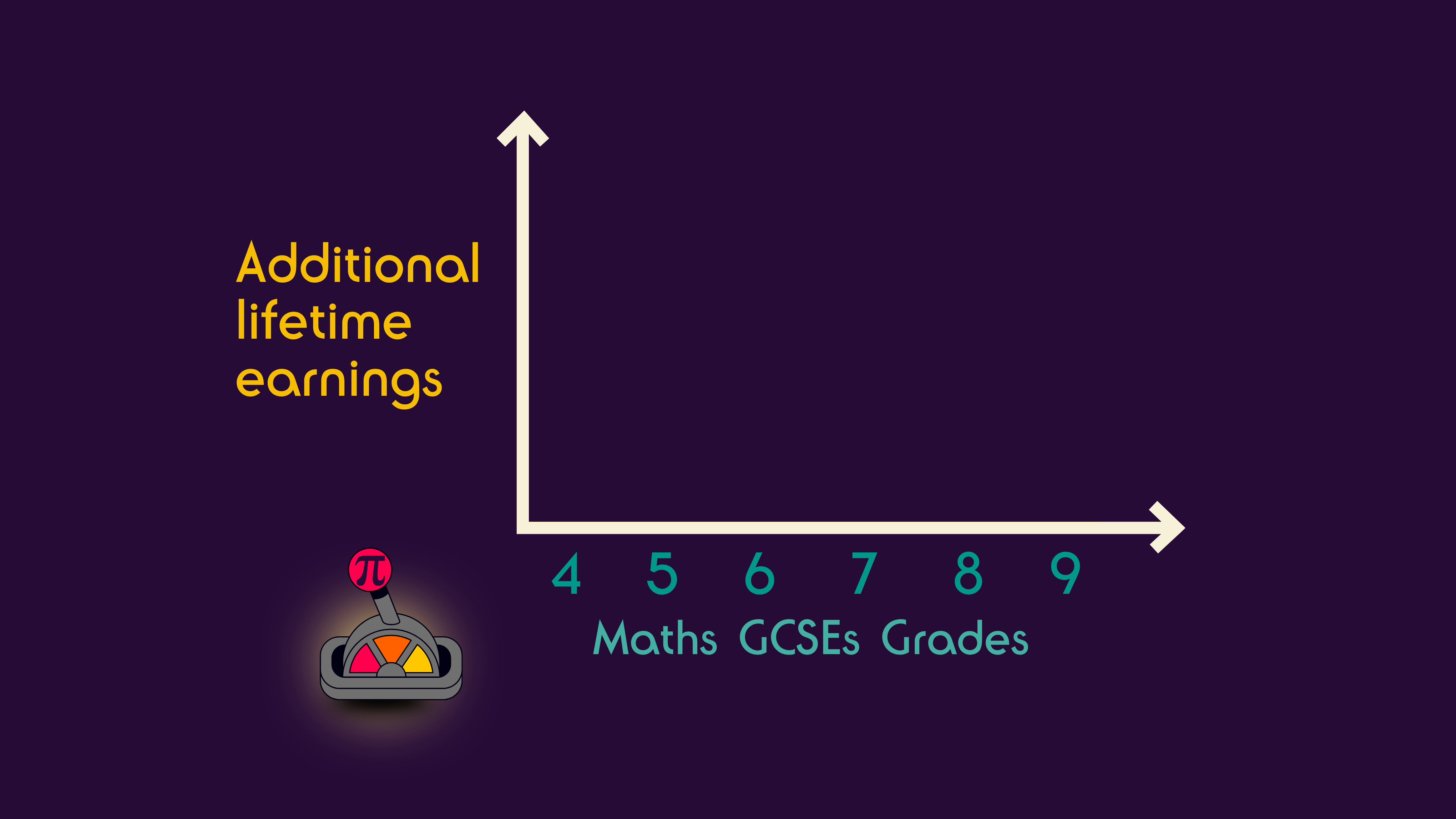
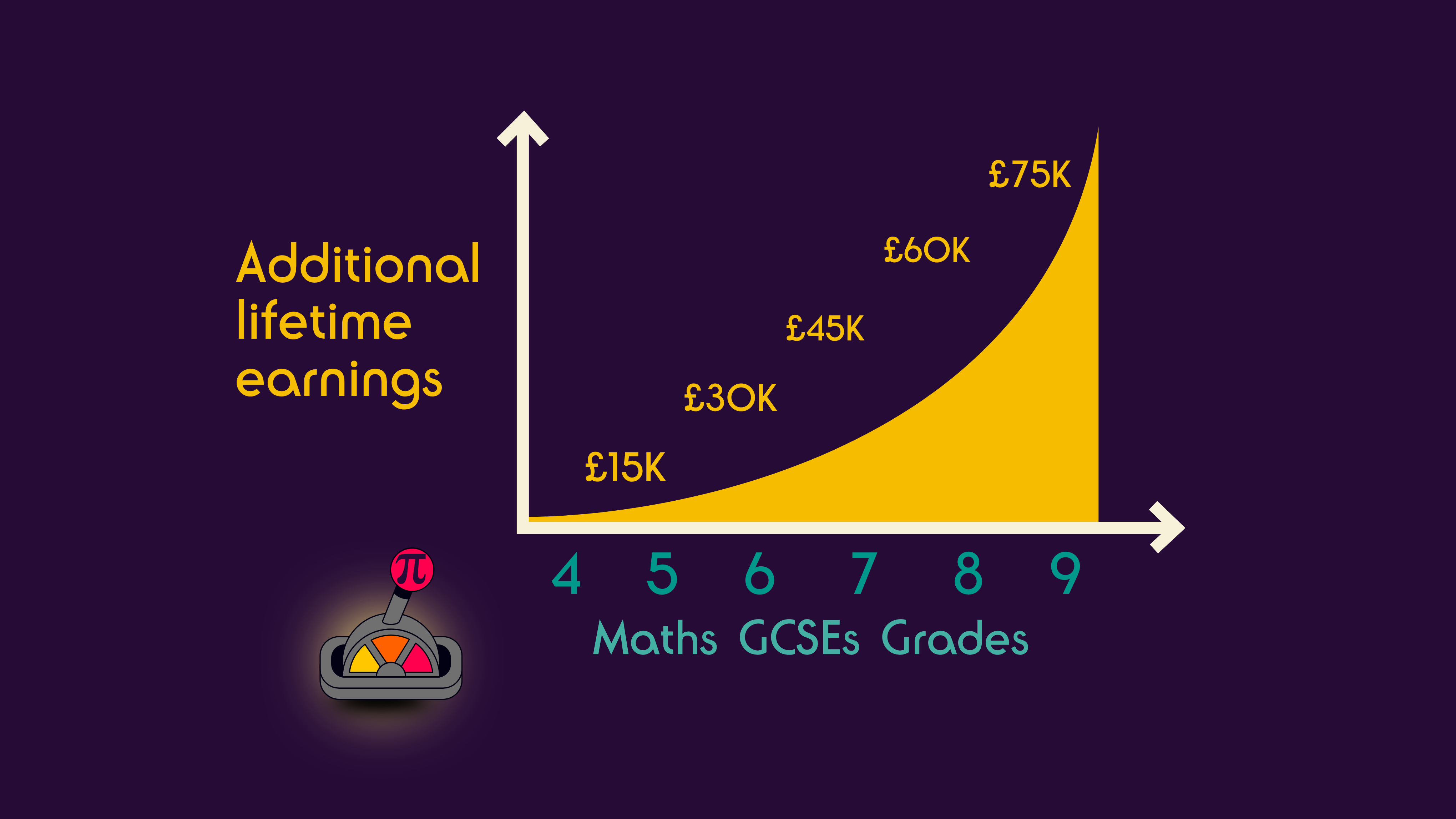
Across nine GCSE subjects, securing one grade higher is worth around £207,000 in lifetime earnings, and maths returns more than any other subject: a single grade improvement at GCSE Maths is linked to a £15K boost — more than double what you get from English.5
Longitudinal research finds that maths attainment remains one of the strongest pathways through which children can outrun their parents’ socio-economic status.6
The cost of not getting there is profound. Adults in the UK with low numeracy earn around 6.5% less than they could,7 and are more likely to be unemployed.8 This generalises to care leavers, who are three to four times more likely to be NEET.9
Recent research shows GCSE Maths attainment is the single biggest measured predictor of whether a care leaver enters sustained employment or education by age 21 — bigger than placement type.10
Young people without passes in Maths are significantly more likely to be NEET at age 20.
Without a maths GCSE, the routes forward narrow sharply. Most Level 3 courses — A-levels and vocational equivalents — require maths as a baseline entry qualification, meaning young people are blocked from progressing even where they have strong attainment in other subjects.
Apprenticeships, including those designed specifically to support young people into work, routinely require a ‘good’ maths pass, closing off one of the few structured pathways into stable employment available to care leavers without traditional academic routes. And without Level 3 qualifications, access to higher education becomes near-impossible — the data shows care leavers who achieved 5+ GCSEs including maths were nearly three times more likely to have studied at degree level than those without.10
The maths barrier is solvable.
We can’t undo the disruptions that put children behind in the first place, but knowledge gaps are not permanent. They can be located, sequenced, and filled. That’s what our platform does.
Our goal: 1,000 children in care on track for a 5+ GCSE Maths grade by the end of 2027.
References
- Department for Work and Pensions (2026). Young people and work: interim report. Independent report. gov.uk
- Children’s Commissioner for England (2025). The impact of housing instability on children’s GCSE grades. Office of the Children’s Commissioner. childrenscommissioner.gov.uk
- Become (2025). Moved During Exams: The educational instability crisis affecting children in care. Become — the national charity for children in care and young care leavers. becomecharity.org.uk
- House of Commons Education Committee (2024). Children’s Homes: Eighth Report of Session 2023–24 — Government Response. Retrieved from committees.parliament.uk
- Hodge, L., Little, A. & Weldon, M. (2021). GCSE Attainment and Lifetime Earnings. Research Report, Department for Education, June 2021. assets.publishing.service.gov.uk
- Huang, H. & Paralkar, V. K. (2021). Better Scores, Better Jobs, an Untested Assumption: Social Mobility and Achievement in Mathematics and Science in the United States. Journal of Research in Education, 30(3), 61–96. eric.ed.gov
- Pro Bono Economics (2021). Counting on the Recovery: The Role for Numeracy Skills in ‘Levelling Up’ the UK. Report commissioned by KPMG for National Numeracy, April 2021. nationalnumeracy.org.uk
- OECD (2025). Survey of Adult Skills 2023 Technical Report. OECD Skills Studies, OECD Publishing, Paris. oecd.org
- Department for Education (2025). Outcomes for children in need, including children looked after by local authorities in England. Annual National Statistics release. explore-education-statistics.service.gov.uk
- Harrison, N. & Dixon, J. (2023). Care Leavers’ Transition into the Labour Market in England. University of Oxford, funded by the Nuffield Foundation. nuffieldfoundation.org